
expertise
Industrial offset, digital, thermal, screen and flexographic printing
Expertise
Industrial offset, digital, thermal, screen and flexographic printing
Expertise
Industrial offset, digital, thermal, screen and flexographic printing
Expertise in industrial printing

From our workshops in Saint-Chamond, we specialise in all printing processes (offset, digital, thermal, screen printing, flexography) to offer high-quality, bespoke finishes on all paper and textile substrates
With over 25 years’ experience in industrial textile printing, we are pleased to offer you the benefit of our expertise.
The importance of industrial printing
Industrial printing refers to the integration of printing technologies into the heart of a mass production process. Used for functional or purely decorative purposes, it involves printing ink or another substance onto a textile or paper substrate. It differs from artisanal printing in its ability to produce large volumes with consistent, reproducible quality across a wide range of colours and materials.
In practical terms, it enables our industrial clients to mark, identify, track and enhance the value of their products throughout their manufacturing process.
Applications and sectors of use
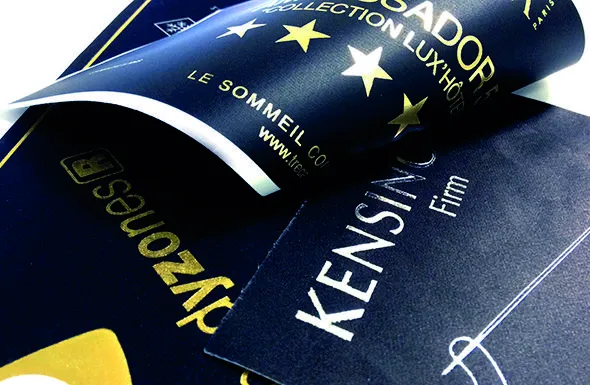
Our industrial printing services meet the technical and regulatory requirements of many sectors:
- Fashion and clothing: textile labels, branded ribbons and garment markings;
- Food and drink: packaging labelling, traceability marking and use-by dates;
- Medical and pharmaceutical: device labelling, compliant labels and identification;
- Automotive and aerospace: technical marking of straps, harnesses and technical textiles;
- Logistics and transport: tickets, adhesive labels and identification tags printed in a format tailored to each supply chain.
Industrial printing technologies
We offer a wide range of industrial printing processes for paper and textiles. Each technique has its own specific characteristics and is suited to particular requirements depending on the substrate, production volume and desired finish; here are the most common methods used in our workshops.
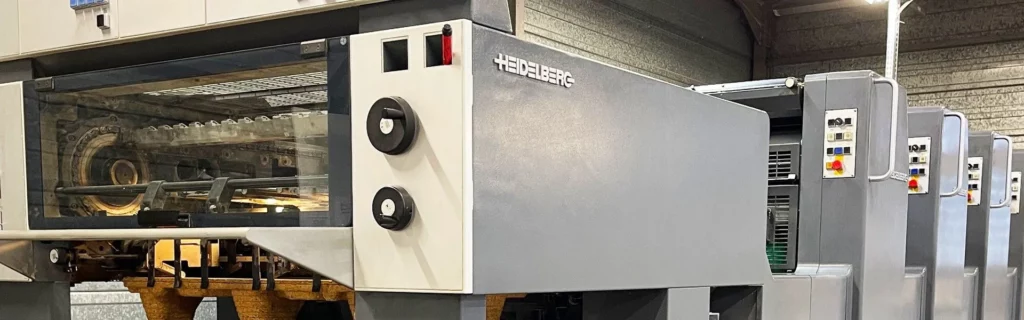
Offset printing : a tried-and-tested technique
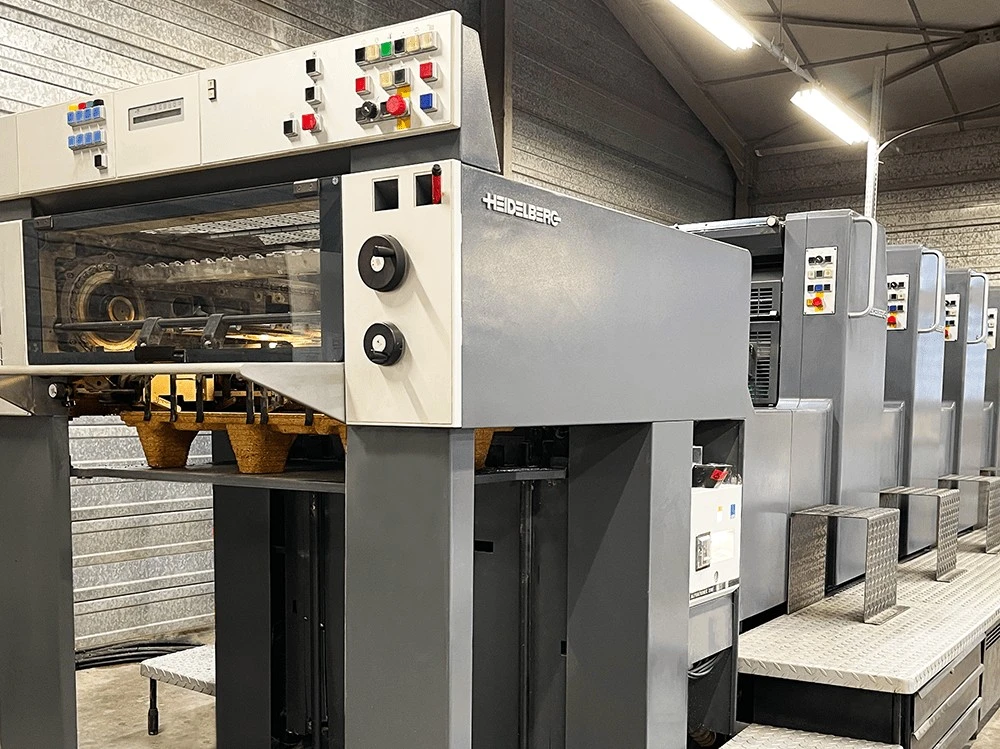
This very old printing technique relies on the use of plates (one for each colour) which transfer the image to an intermediate cylinder, the blanket. The image is then printed onto the final substrate (fabric or paper). CMYK four-colour printing allows most of the colour range to be reproduced using just four plates, with spot colours (Pantone) added where the graphic design requires them.
Offset printing is the most commonly used technique for large print runs (over 500 copies). It offers excellent reproduction quality, fine detail and a competitive unit cost for long runs, thanks to dedicated industrial presses.
Screen printing : versatility and precision
This printing technique involves the use of a stencil. It can be used on a wide range of materials and is particularly well-suited to textile printing. As each colour is printed separately, it is ideal for simple designs and brand logos. Screen printing guarantees rich colours, excellent coverage and outstanding wash fastness: it is the preferred solution for the durable marking of ribbons, straps and technical fabrics.

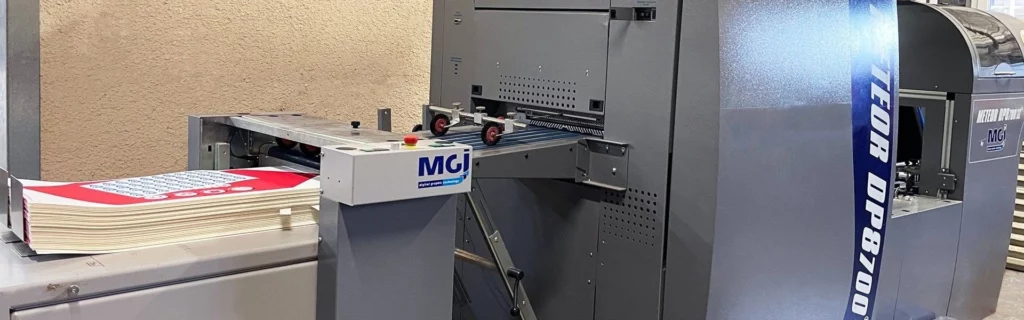
Digital printing: speed and flexibility
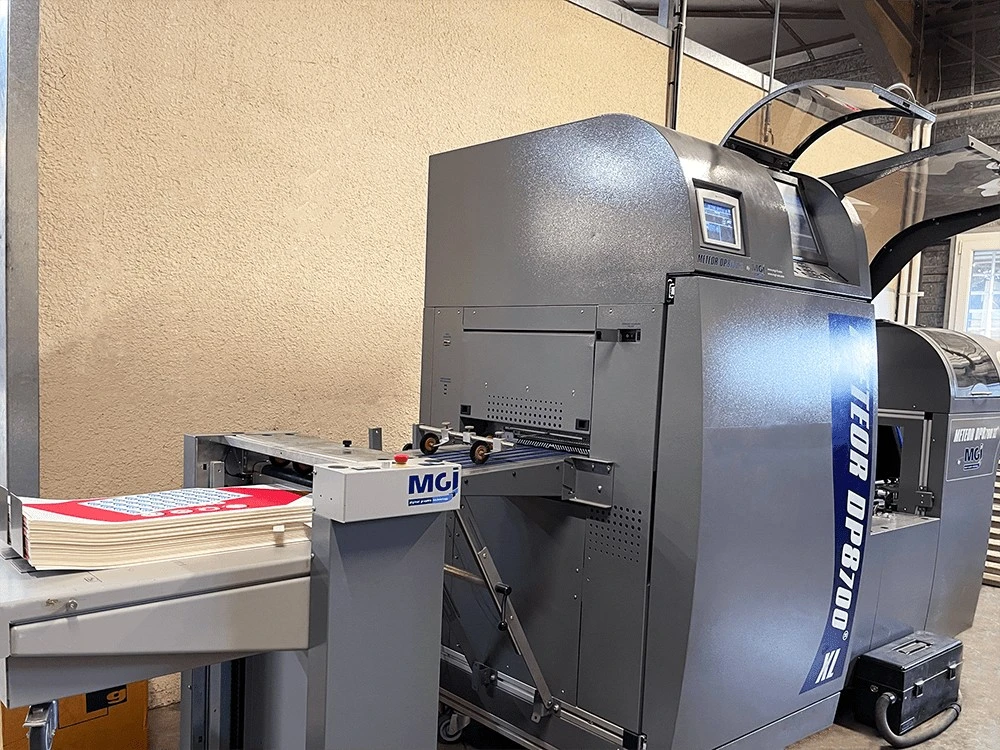
This technique allows printing directly onto the substrate using computer data via high-definition inkjet printers. It is well suited to rapid printing of small runs. It also makes it easy to carry out layout and colour tests and to print on a large scale.
Digital technology also offers the possibility of customising each item (variable data, serial numbers, barcodes) at no extra cost, thereby meeting the traceability requirements specific to industrial production.
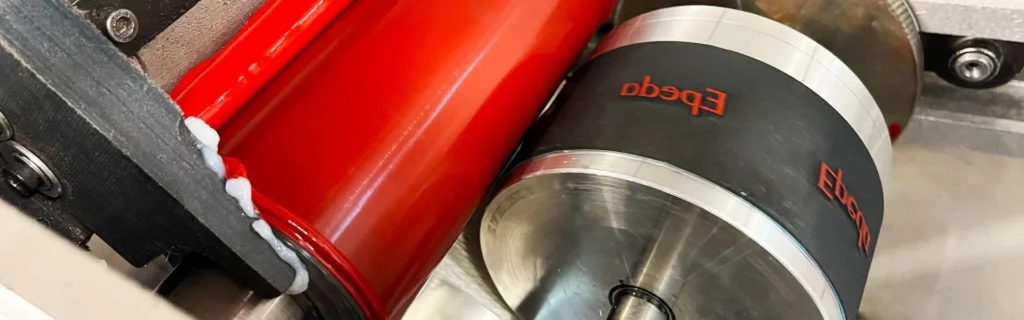
Flexography : for packaging and labels
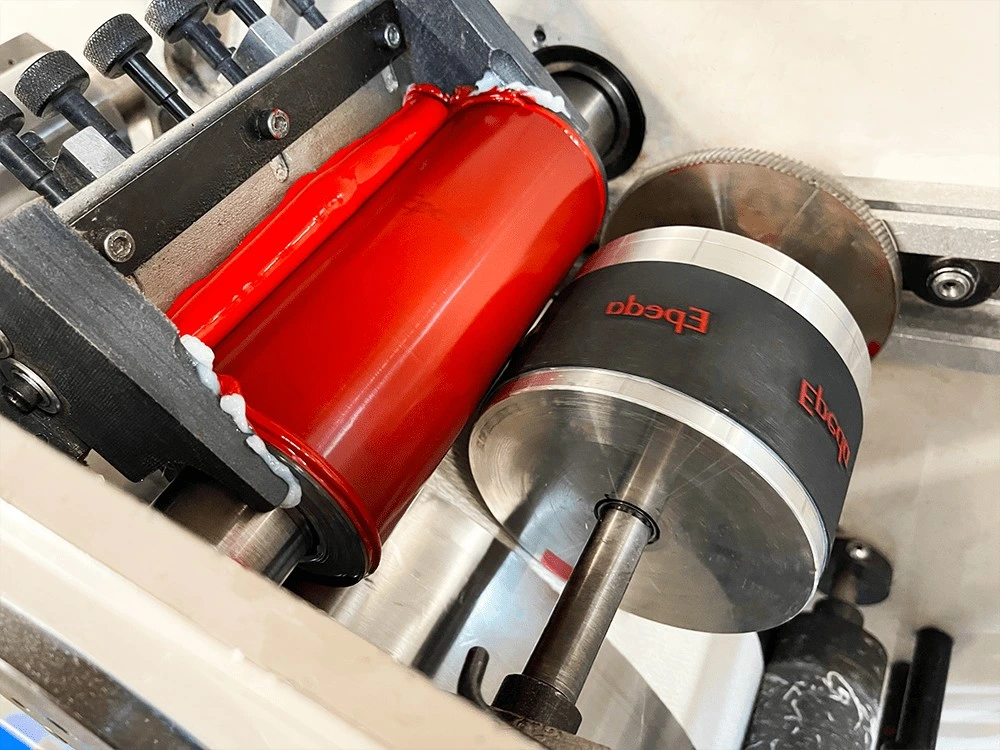
This technique works on the same principle as a stamp. The ink is applied to a flexible, raised surface, which then transfers the design onto the final substrate (usually cardboard or paper). It is a fast, high-productivity printing method, widely used for customising packaging and printing food labels.
The use of UV inks, which cure instantly under ultraviolet light, enhances the mechanical and chemical resistance of the marking.
Thermal printing: temporary solutions
This process does not use ink: instead, the paper changes colour when heat is applied to its surface. This method is quick and cost-effective, but the print is less durable over time due to its sensitivity to UV light. This technique is preferred for temporary prints, such as receipt slips and shipping labels.
The benefits of industrial printing
Quality and sustainability
Industrial printing ensures a level of consistency that cannot be achieved by small-scale, artisanal methods. The choice of technique and inks has a direct impact on the durability of the marking:
- resistance to repeated washing on textile substrates;
- UV-resistant for outdoor use;
- resistance to abrasion and chemicals for demanding environments;
- long-lasting colour fastness.
Our two in-house laboratories enable us to test and validate the durability of each print before it goes into mass production. Our prints are produced in accordance with OEKO-TEX® STANDARD 100, FSC® and ISO 9001:2015 certifications, which demonstrate our internationally recognised commitment to quality and the environment.
Innovation and customisation
Today’s printing technologies open up a wide range of possibilities: full-colour printing, gradients, metallic or fluorescent effects, and high-definition finishes on technical substrates. Digital technology allows for customisation down to a single item, whilst maintaining the productivity expected in an industrial setting. This combination of flexibility and high-volume production is at the heart of our approach to printing textile labels, as well as all our printed materials.